Cup for Periods: An Honest Beginner's Guide to Menstrual Cups
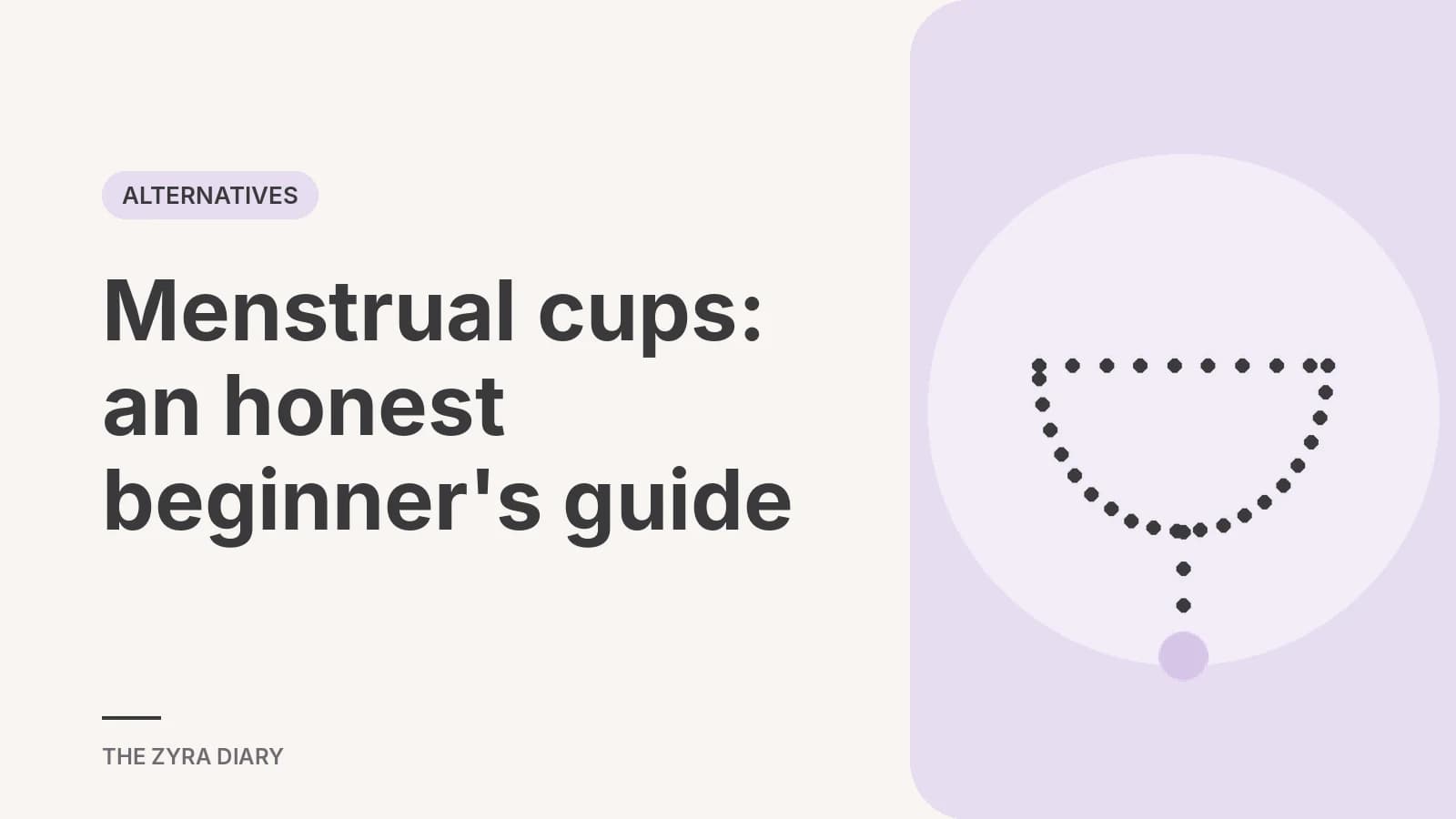
A cup for periods is a small, flexible silicone cup that you fold and place inside your body to collect your flow, instead of absorbing it like a pad. You empty it, rinse it and use it again. Cleveland Clinic says a cup can stay in for up to 12 hours.
Most of us grew up knowing one period product. Cups are the other option people keep asking about, so here's what a menstrual cup is, how it works and who it suits, with no sales pitch in either direction.
Key takeaways
- A cup collects, a pad absorbs. The NHS puts it simply: menstrual cups collect the blood rather than absorb it.
- It's reusable. You wash it and use it again, so there's nothing to throw away each day.
- Wear time is longer. Cleveland Clinic says up to 12 hours, with more frequent emptying on heavy days.
- Size and folding matter most. Most first-time trouble comes from the wrong size or a cup that hasn't fully opened.
- Pads are still a fine choice. Comfort and privacy decide this, and the right product is the one you'll use without dread.
What is a menstrual cup?
A menstrual cup is a bell-shaped cup, usually made of silicone or rubber, that sits low inside the vagina and holds your flow until you take it out. Cleveland Clinic compares it to a bucket catching rain: the blood stays in the cup until you remove it and empty it.
If you're sensitive to latex, go for silicone. Our guide to choosing the right sanitary pad covers the other side of the comparison, if you want to see how pads work first.
Cup or pad: how do they compare?
The biggest difference is what happens to your flow. A pad soaks it up and gets thrown away, while a cup holds it and gets washed.
| Menstrual cup | Sanitary pad | |
|---|---|---|
| How it works | Collects flow | Absorbs flow |
| Reusable | Yes, after washing | No |
| Where it sits | Inside the body | On your underwear |
| Wear time | Up to 12 hours (Cleveland Clinic) | Changed through the day |
| Learning curve | A few cycles to get easy | None |
Neither is better in general. If you like to keep things external and quick, pads win. If you'd like to wear one product for most of the day and carry less in your bag, a cup is worth a try.
How do you choose a cup size?
Pick the size by your flow first. Cleveland Clinic says small cups suit light to medium flow and large cups suit medium to heavy flow, and the maker's size chart on the packaging will add detail on age and body.
If your first cup doesn't fit well, the same guidance is to try the next size or a different brand before giving up.
How do you insert a menstrual cup?
Wash your hands, wet the rim with water, fold the cup in half with the rim facing up and slide it in the way you would a tampon. Then rotate it so it opens. Cleveland Clinic says it should sit a few inches below the cervix.
Practise at home first, on a day when you're not in a rush. Expect the first try to feel awkward. These steps help:
- Wash your hands properly before anything else.
- Wet the rim with clean water so it slides in easily.
- Fold it, keep the rim up and go slowly.
- Rotate it a little so it springs fully open.
- Check there's no pinching or pressure.
Insertion shouldn't hurt. If it does, stop and don't force it. If something feels unusual for you, speak to a doctor.
How do you remove and empty it?
Wash your hands, then pinch the base of the cup rather than pulling on the stem. Pulling on the stem can create suction and discomfort, so pinching breaks the seal first. Pull down gently, tip the contents into the toilet and rinse the cup with clean water. It doesn't need to be dry before you put it back in.
On your heaviest days, empty it sooner than the 12-hour limit. That's when leaks are most likely.
How do you clean a menstrual cup?
Wash it with fragrance-free soap each time you take it out. At the end of your period, boil it in water for a few minutes, let it cool and air dry, then store it in its pouch or container somewhere cool and dry. Check the packaging, because some cups come with their own instructions.
This is the part that decides whether a cup works in your home. If you share a bathroom, or tap water isn't always available, think through where you'll rinse it before you buy one. Cleveland Clinic notes that cleaning away from home, in a public toilet for example, is hard for some people.
Is a menstrual cup right for you?
A cup suits you if you're comfortable with the idea and have a private spot to rinse it. It's a harder fit if you don't have that, or if the idea makes you uneasy, and waiting until you feel ready is fine.
Some families raise eyebrows about anything that goes inside the body. It can help to explain it as a reusable collection cup, much as you'd explain any other period product. Your body and your comfort come first, and nobody needs to hurry you into this.
For painful days, a cup won't change cramps, so our guide to period pain relief at home still applies. If a family member calls periods maahwaari or haiz, the periods meaning in Urdu guide has the words in both languages. You'll find more in our period products guides.
A practical way to start
Pick the size from the chart, practise at home, keep a pad as a backup for the first cycle or two, and give it three periods before you decide. If it isn't for you, there's no loss, since pads and your usual routine are still there. To understand where cramps fit in your month, read our guide to the pain of periods.
At Zyra we write honest, practical period guides for Pakistan, and our pads are coming soon. Join the list to hear when they launch.
Questions people ask
How long can you wear a menstrual cup?
Cleveland Clinic says up to 12 hours before emptying. Heavier days may need emptying more often to avoid leaks.
Does a menstrual cup hurt?
It shouldn't. Insertion can feel strange at first, but it shouldn't be painful. If it hurts, take it out and try again later with a different fold or size.
How often do you need to clean a cup?
Rinse it each time you empty it, and wash it with fragrance-free soap when you take it out. At the end of your period, boil it for a few minutes before storing it.
Which cup size should a beginner pick?
Go by flow first: small for light to medium, large for medium to heavy, according to Cleveland Clinic. Then check the maker's size chart.
Can you reuse a menstrual cup?
Yes. The NHS says you can wash menstrual cups and use them again.