Pain of Periods: Why Cramps Happen and How to Track Them
The pain of periods usually means cramps in the lower tummy that start around the beginning of your period and ease within a few days. It feels different for everyone, and it can change from one cycle to the next. The most useful thing you can do is get to know your own pattern, and a simple cramp diary is the easiest way to do that.
This guide explains why cramps happen, how to track them without an app, and how to use what you learn to plan easier days.
Key takeaways
- Cramps are common. The NHS describes period pain as tummy pain at the start of a period that can spread to the back and thighs and usually lasts up to 3 days.
- Everyone's pattern is different. How strong it is, when it starts and how long it lasts all vary from person to person.
- Tracking turns guesswork into a plan. Two or three cycles of notes show you when your hard days are likely to fall.
- Plan around your pattern. Use what you learn to prepare a comfort kit, lighten your schedule and choose the right pads.
- Habits across the month help. Regular movement, good sleep and less stress make painful days easier over time.
Why does the pain of periods happen?
Each month, the lining of the womb builds up and then sheds as your period. To help shed it, the womb tightens, and those tightenings are what you feel as cramps. The NHS explains period pain as the womb tightening during your period.
What cramps commonly feel like
People describe period cramps in lots of ways:
- a dull, constant ache low in the tummy
- waves of tighter, stronger cramping
- an ache that spreads to the lower back or down the thighs
- feeling tired, bloated or a bit queasy at the same time
For many people, the first day or two is the hardest, and it eases after that.
Why it varies so much
Cramps can feel different from cycle to cycle. Sleep, stress, how active you've been and where you are in life can all play a part. That's exactly why tracking helps: it shows your pattern rather than the one you assume you have.
How to track period pain (no app needed)
A notes app or a small notebook works perfectly. For each period, jot down a few things each day:
| What to note | Example |
|---|---|
| Date and day of period | 12 Nov, day 1 |
| Pain score from 0 to 10 | 6 |
| Where you feel it | lower tummy and back |
| When it started and eased | started morning, eased by evening |
| Flow | heavy |
| What helped | hot-water bottle, short walk |
| What it affected | skipped gym, left class early |
| Other feelings | tired, bloated |
Keep it quick: one line a day takes less than a minute.
What to look for after two or three cycles
Once you have a couple of months of notes, look back and ask:
- When do the hardest days fall? Day 1? Day 2? The day before your period starts?
- What actually helped? Heat, a warm shower, rest, movement? Do more of what worked.
- What made it harder? A late night, a stressful week, skipped meals?
- How much does it affect your plans? This tells you how much to plan around it.
If something feels unusual for you, speak to a doctor. Your diary is a handy, clear record to take along.
Use your pattern to plan easier days
Set a reminder before day 1
If your cycle is fairly regular, add a reminder to your phone calendar a couple of days before your next period is due. It's your cue to pack your comfort kit and lighten your diary.
Pack a comfort kit
Keep a small pouch ready: spare pads, a stick-on heat patch or a hot-water bottle at home, a water bottle, a light snack, and a small bag for wrapping used pads.
Lighten the heaviest days
Where you can, move demanding tasks, long journeys or late nights away from your hardest day. Comfortable clothes and a pad you trust make the day easier too.
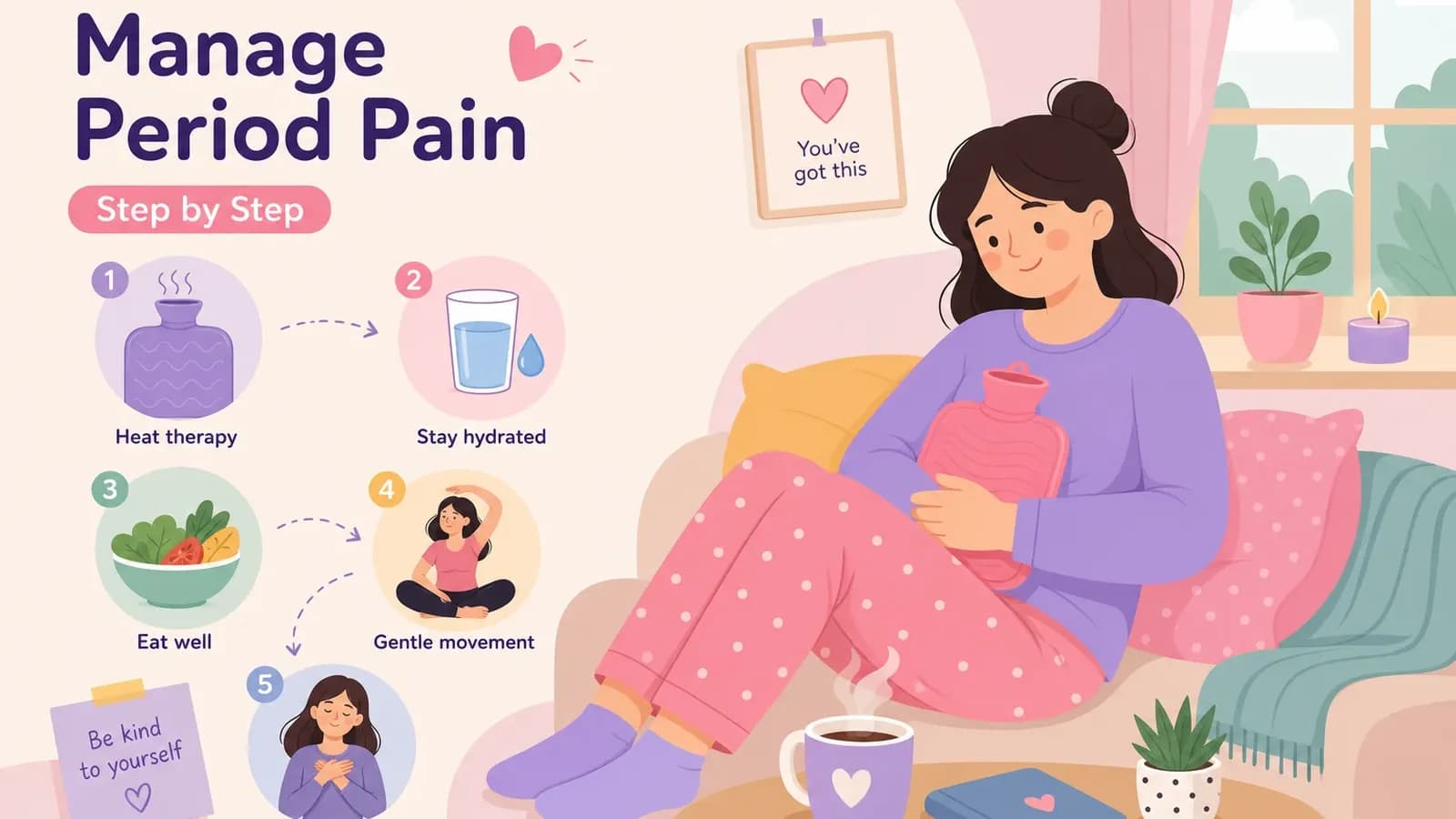
For day-of comfort ideas like heat, warm baths and stretches, see our guide to managing periods with pain at home.
Habits across the month that help
Period pain isn't only about the days you bleed. A few habits through the whole month can make those days easier:
- Keep moving. The NHS lists gentle exercise like yoga, swimming, walking or cycling as something that can help with period pain. Regular activity across the month tends to help most.
- Protect your sleep. Pain feels bigger when you're tired. A steady bedtime, especially the week before your period, helps.
- Lower everyday stress. Five minutes of slow breathing, a walk outside or a quiet cup of tea all count.
- Cut back on smoking and alcohol. The NHS notes both may make a difference.
Choosing comfortable pads on painful days
When cramps are strong, your pad shouldn't add to the discomfort. On painful days, look for:
- soft, breathable materials that don't rub or irritate
- enough absorbency that you aren't changing constantly at the worst moment
- a secure fit, with wings, so you can curl up, stretch or rest without worrying about leaks
Our guide on how to choose the right sanitary pad goes into more detail.
The bottom line
The pain of periods is common, but your pattern is your own. Track two or three cycles, notice what helps, and use it to plan ahead, so your hardest days come with a plan instead of a surprise.
At Zyra, we're writing practical, honest guides for periods in Pakistan, and our pads are coming soon.
Questions people ask
How long does period pain usually last?
The NHS says period pain usually lasts up to 3 days. For many people, the first day or two is the hardest.
Where do you feel period pain?
Mostly in the lower tummy. Cramps can also spread to the lower back and thighs.
What is the easiest way to track period pain?
Use your phone's notes app or a small notebook. Each day of your period, note the date, a pain score from 0 to 10, where you feel it, your flow, and what helped.
How many cycles should I track?
Two or three cycles are usually enough to see a pattern and plan around your hardest days.