Periods With Pain? 10 Ways to Feel Better at Home, Work or College
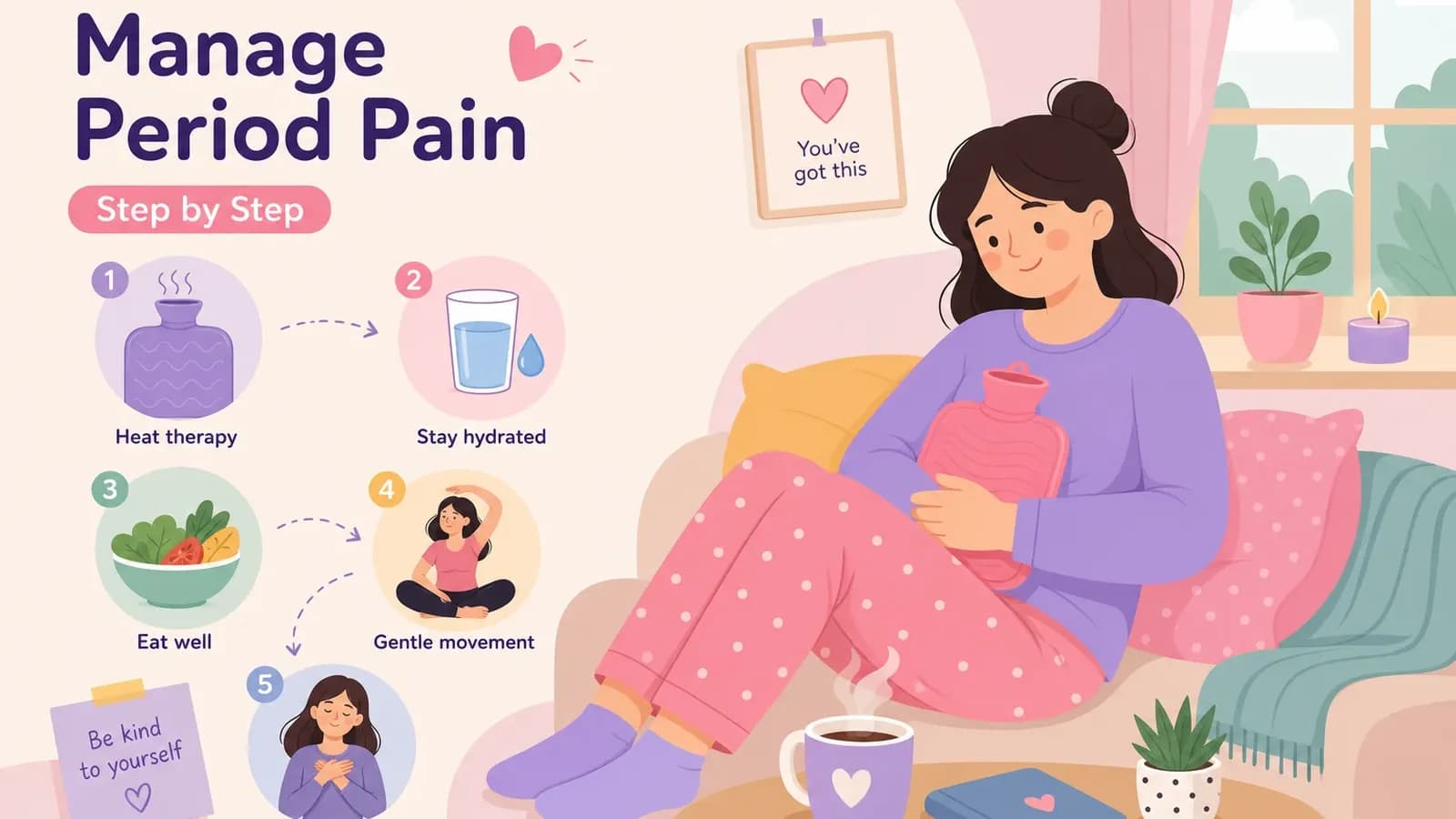
If you get periods with pain, the simplest place to start is warmth on your tummy, gentle movement, and a slower pace on your heaviest days. None of it is complicated or expensive, and most of it is already in your home.
Period cramps are common, yet most of us were never really told what helps. We were just told to get on with it. This guide covers why cramps happen, ten practical comforts for home, work and college, and how to plan ahead so a painful day doesn't catch you off guard.
Key takeaways
- Heat comes first. A hot-water bottle or heat pad wrapped in a towel on your lower tummy is the NHS's first suggestion for period pain.
- Warm water helps too. A warm bath or shower can ease cramps and help you relax.
- Keep moving, gently. Walking, yoga, swimming or cycling can help, and the habit is worth keeping all month.
- Look after the basics. Sleep, regular meals, water and slow breathing all make a painful day easier.
- Plan ahead. A small comfort kit in your bag means cramps don't catch you unprepared at work or college.
Why do periods come with pain?
During your period, the womb tightens to help shed its lining, and that tightening is what you feel as cramps. The NHS describes period pain as pain in your tummy at the start of your period, which can spread to your back and thighs and usually lasts up to 3 days.
Many people find it's strongest on the first day or two, then eases as the period goes on.
10 ways to ease period pain at home
1. Put heat on your tummy
Heat is the classic for a reason. Use a hot-water bottle or a heat pad wrapped in a tea towel and rest it on your lower tummy or lower back. Never put a hot-water bottle or heat pad straight on bare skin, and don't fall asleep on a heating pad.
2. Have a warm bath or shower
The NHS suggests a warm bath or shower for period pain. Warm water relaxes tense muscles, and ten quiet minutes to yourself helps as well.
3. Massage your tummy and back
Gentle circular strokes on your lower tummy and lower back, with your hands or a little oil, can ease tight muscles. If someone at home can help with your back, even better.
4. Move gently
It may be the last thing you feel like doing, but gentle exercise like walking, yoga, swimming or cycling can help with period pain. On a painful day, even a slow ten-minute walk or a few stretches on the floor counts.
5. Make movement a monthly habit
Regular activity across the whole month, not just on period days, tends to make the biggest difference over time. Pick something you'll actually keep doing: an evening walk, a short home yoga routine, or a weekly swim.
6. Try some simple stretches
A few gentle positions many people find soothing:
- Child's pose: kneel, sit back on your heels and stretch your arms forward on the floor.
- Knees to chest: lie on your back and gently hug your knees in.
- Cat–cow: on hands and knees, slowly round then gently arch your back.
- Lying twist: lie on your back, drop both knees to one side, then the other.
Hold each for a few slow breaths, and stop anything that hurts.
7. Keep warm drinks and water close
Staying hydrated helps you feel less sluggish, and many people find a warm drink like ginger or saunf (fennel) tea soothing when cramps start. Small, regular meals help keep your energy steady too.
8. Prioritise sleep
Pain is harder to cope with when you're tired. Aim for an earlier night before and during your period, and use a pillow under your knees or a hot-water bottle (wrapped, and away from bare skin) to get comfortable.
9. Slow your breathing
When cramps tighten, breathing tends to get shallow. Try breathing in slowly through your nose for four counts and out for six, for a few minutes. It helps your body relax and takes the edge off tension.
10. Cut back on smoking and alcohol
The NHS notes that not smoking and cutting down on alcohol may also help with period pain.
Managing a painful day at work or college
Cramps at the office or on campus are real and common, and nothing to be embarrassed about. A little preparation makes a big difference.
Pack a small comfort kit
Keep a pouch in your bag with:
- two or three spare pads
- a stick-on heat patch, if you can find them at your pharmacy or online
- a refillable water bottle
- a light snack
- a few tissues and a small bag for wrapping used pads
Plan your heaviest days
If your period is fairly regular, note when it usually starts and plan around it. Keep a lighter schedule on day one if you can, wear comfortable clothes, and choose a pad that won't have you worrying about leaks. Our guide on how to choose the right sanitary pad can help with that.
When you need to rest, rest
Some days the pain means you need to slow down, and there's no weakness in that. It's your body asking for a break.
If you'd like to try pain relief medicine, a pharmacist can tell you what suits you. If something feels unusual for you, speak to a doctor.
Your period doesn't have to take over your month
The steps are simple: warmth on your tummy, a warm bath, gentle movement, good sleep and a small kit in your bag. Try one or two this cycle, notice what helps, and build your own routine from there.
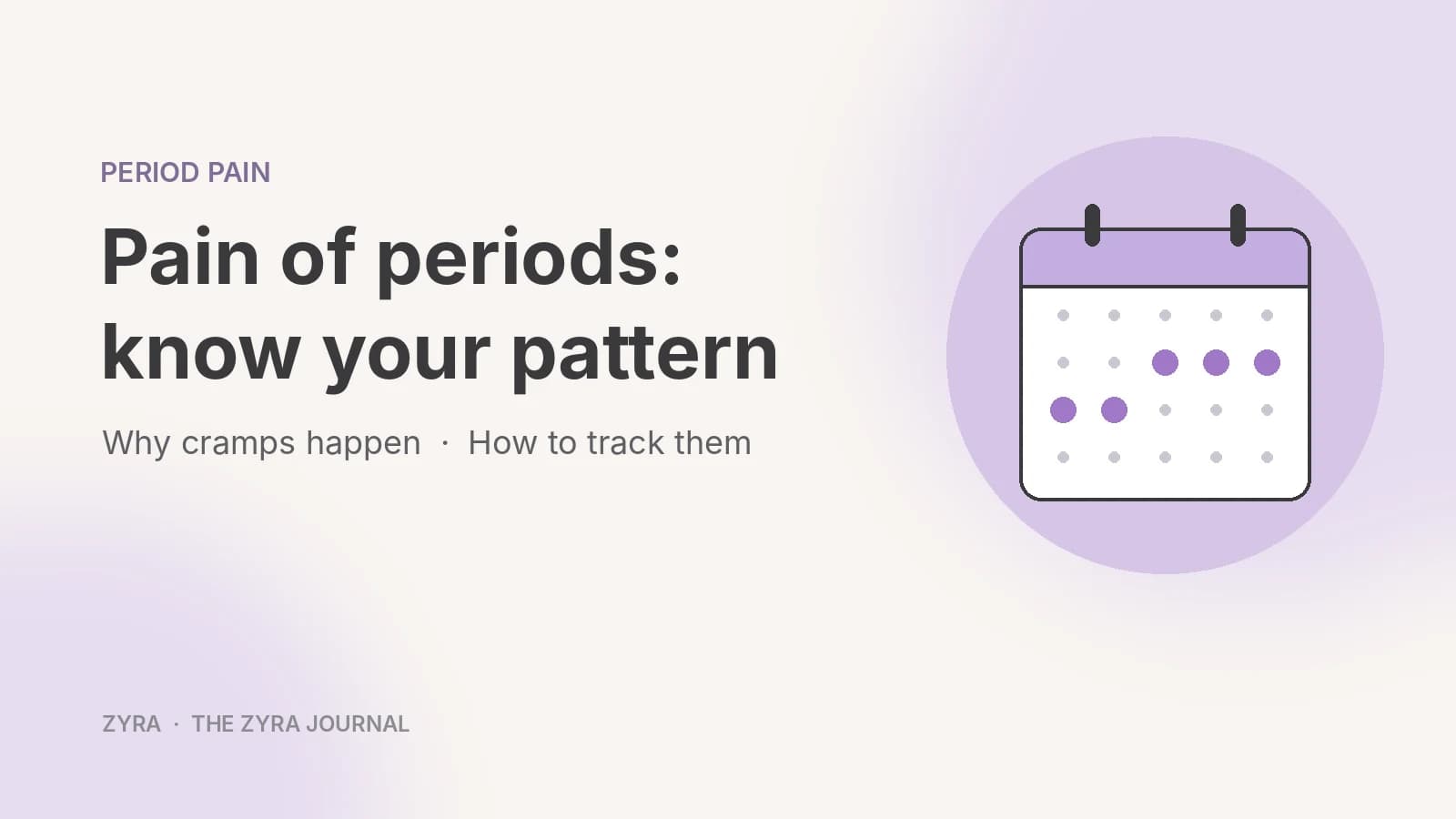
At Zyra, we're writing honest, practical guides for periods in Pakistan, and our pads are coming soon. Want to understand cramps a little better? Read why period pain happens and how to track it.
Questions people ask
What gives quick relief from period pain at home?
Heat is the usual first step: a hot-water bottle or heat pad wrapped in a towel on your lower tummy. A warm bath or shower, gentle stretches and slow breathing can help too.
Does exercise really help period cramps?
Yes. The NHS lists gentle exercise like yoga, swimming, walking or cycling as something that can help. Keeping active through the whole month tends to help most over time.
What can I do for period pain at school or the office?
Carry a small kit with spare pads, a stick-on heat patch, water and a snack. Wear comfortable clothes, and keep your heaviest day as light as you can.
What should I drink for period pain?
Water through the day, plus warm drinks you find comforting. Many people like ginger or fennel (saunf) tea when cramps start.