How to Choose the Right Sanitary Pad for Your Flow and Budget
Choosing sanitary pads comes down to four things: your flow, your day, your skin and your budget. Get those four right and most of the usual problems (leaks, rashes, that mid-afternoon "is it showing?" worry) quietly go away.
Most of us pick pads by habit, or by whatever is on the shelf nearest the till. That's understandable. But a few minutes of thinking it through can make every cycle more comfortable. This guide walks through each decision, one at a time.
Key takeaways
- Flow decides absorbency. If a pad is fully soaked in under three hours, move up a level.
- Your day decides the type. Regular-length pads for daytime, longer pads for nights and heavy days, thinner pads for light days and travel.
- Your skin decides the material. Unscented pads with a soft, breathable top layer are kinder to skin, especially in Pakistan's heat.
- Your budget decides the pack, not the comfort. Compare the price per pad, not the price per pack.
- Change regularly. At least every 4 to 6 hours during the day, or sooner if the pad feels damp.
What are the main types of sanitary pads?
Before you compare packs, it helps to know which kind of pad you're shopping for. Most pads fall into four groups, and using the wrong one for the situation is usually where the trouble starts.
Everyday day pads
These are the workhorse pads for regular or heavier flow during waking hours. They usually come in a standard length and a longer length. Longer isn't automatically better: a pad that extends past the narrow part of your underwear can fold, shift and leak at the edges. Fit matters as much as length.
Long and overnight pads
Overnight pads are longer and often wider at the back, to stop leaks when you're lying down. If a regular pad is soaked within two to three hours on heavy days, or if night leaks keep happening, a longer pad is the logical next step.
Thin and ultra-thin pads
Thin pads put comfort and discretion first. "Thin" doesn't mean "weak": many use compressed cores that hold a light to regular flow well. They're the practical choice for school, work or travel, when you want to carry a few spares without bulk. In hot weather, less thickness also means less heat against the skin.
Panty liners
Liners are for very light days, the last day of a period, or everyday freshness. They aren't designed for a regular flow.
Which features matter most?
Once you know the type, the next layer is features. Not all of them matter equally, and some matter more than the packaging suggests.
Absorbency: light, regular and heavy
Absorbency is how much a pad can hold before it needs changing. The simplest test: check your pad about three hours in. If it's already fully soaked, go up one level. If it's barely used by the time you change it, you can probably go down one.
Wings, length and adhesive: the leak-stoppers
Wings fold around the sides of your underwear and keep the pad flat, which cuts down side leaks. Cleveland Clinic notes they also help stop pads bunching. On active days, wings are worth having.
Length matters most for coverage at the back, during sleep or on heavy days. Adhesive is a balance: strong enough that the pad doesn't move, gentle enough that it doesn't tug at fabric or skin. A student sitting in class all day needs something different from someone on her feet in a busy kitchen or shop.
Materials that are kind to skin
Pads sit against sensitive skin for hours, so the top layer matters. Look for:
- Unscented. Fragrance is one of the most common causes of irritation. Cleveland Clinic recommends unscented pads to lower the chance of rashes.
- A soft, breathable top layer. Cotton or cotton-feel top sheets let air move and cause less friction. That matters in a Karachi summer.
- Simple, clearly labelled packs. If the pack doesn't tell you what's in the pad, that tells you something too.
If something feels unusual for you, speak to a doctor.
How to compare price without guessing
Pack sizes vary a lot, so the pack price alone can mislead. The fairest comparison is price per pad:
Price per pad = pack price ÷ number of pads in the pack
For example, a pack of 8 pads at Rs 240 works out to Rs 30 per pad. A pack of 16 at Rs 400 works out to Rs 25 per pad. The bigger pack is cheaper per pad, even though it costs more upfront.
Some practical tips:
| If you… | Try this |
|---|---|
| Have a mix of light and heavy days | Buy two types: longer pads for heavy days and nights, thinner ones for lighter days, rather than one "do-everything" pad |
| Have a tight monthly budget | Compare price per pad, and buy the larger pack of the type you use most |
| Have sensitive skin | Prioritise unscented and a soft top layer over extra features |
| Travel or commute a lot | Pick individually wrapped pads that are easy to carry |
Managing pads on a busy Pakistani day
At school, college or the office
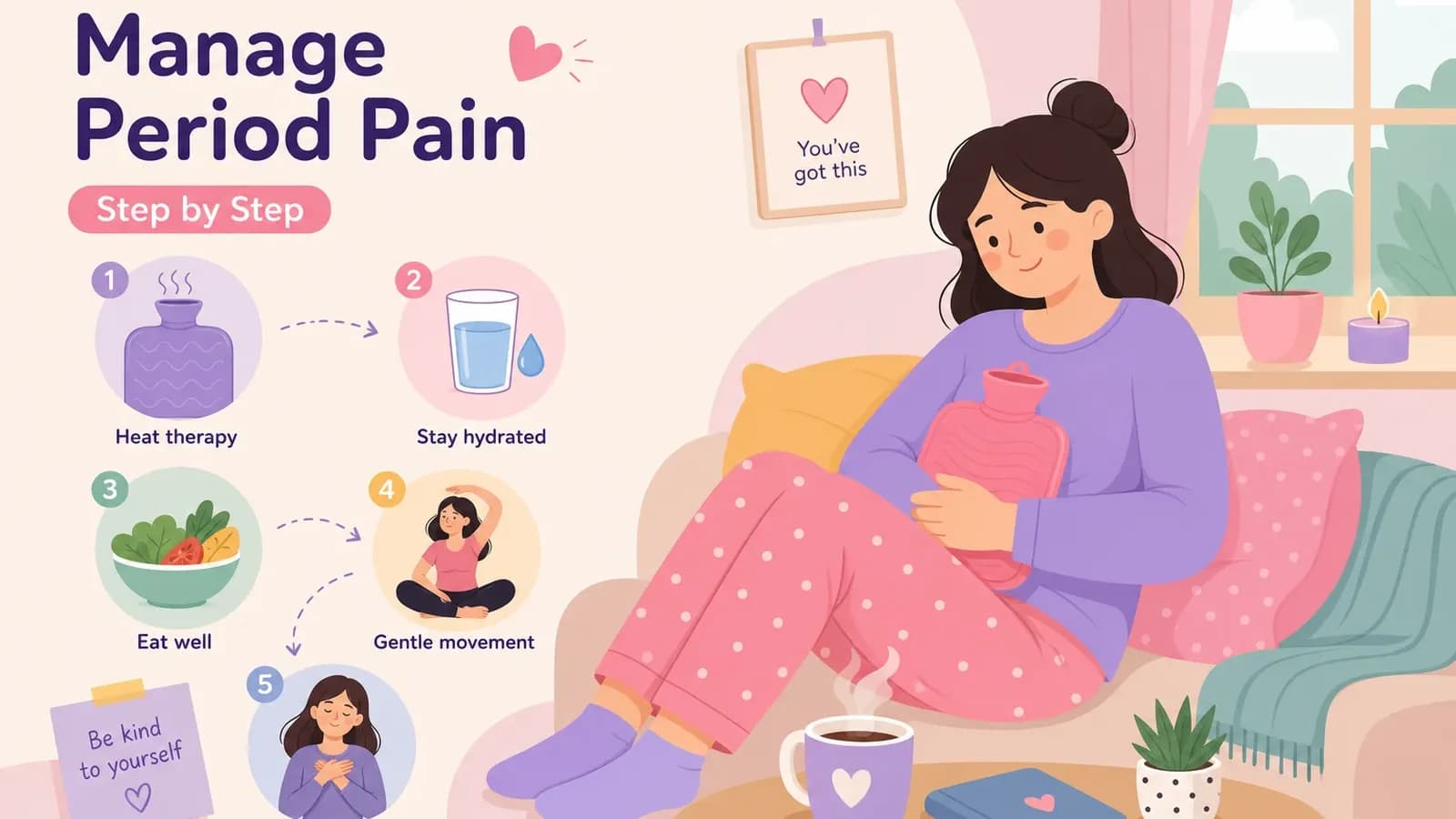
Keep a small pouch in your bag: two or three spare pads, a few tissues, and a small bag or some paper for wrapping a used pad. On heavy days, a longer pad in the morning can see you through a long lecture or meeting with less worry. If cramps tend to come along too, our guide to managing periods with pain has a simple comfort kit you can add to the same pouch.
On long journeys
On long road trips, when a clean washroom might be hours away, a longer or overnight pad gives you more time between changes. Change as soon as you reasonably can, and carry spares within easy reach rather than buried in a suitcase.
Disposing of pads properly
Wrap a used pad in its own wrapper or some paper and put it in a bin. Never flush pads: the absorbent core swells and blocks drains. When you're out and there's no bin in the washroom, wrap it and carry it until you find one.
Where to buy sanitary pads in Pakistan
Pads are sold everywhere, from neighbourhood kiryana shops to large pharmacies, supermarkets and online marketplaces. A few checks help wherever you buy:
- Sealed packaging. It's a hygiene product, so the pack should be intact.
- The right count and type. Check you're getting the length and absorbency you meant to buy.
- Online: a trusted seller. Look for an official brand store or a seller with strong recent reviews, and avoid listings with suspiciously low prices or missing details.
Smaller towns may stock fewer types. If you can't find what suits you locally, ordering from a trusted online seller is a practical alternative.
The right pad is a simple, specific choice
The right sanitary pad isn't the most expensive one or the most popular one. It's the one that matches your flow, fits your day, is kind to your skin, and sits within a budget you can keep up every month. Work through the four questions, try one change at a time, and notice what feels better.
Zyra is a new Pakistani period care brand, and our pads are coming soon.
Questions people ask
What is the difference between sanitary pads and sanitary napkins?
There isn't one. "Sanitary pads" and "sanitary napkins" mean the same thing. In Pakistan, "pads" is the everyday word, while "napkins" still appears on some packaging.
How often should you change a sanitary pad?
At least every 4 to 6 hours during the day, or sooner if it feels damp or full. Change it even on light days, because a pad worn too long can irritate skin and cause odour.
Are thin pads less absorbent than thick pads?
Not necessarily. Many thin pads use compressed cores that hold a light to regular flow very well. For your heaviest days and nights, a longer pad is usually more comfortable.
Should I choose pads with wings?
For most people, yes, especially on active days. Wings keep the pad in place and help prevent side leaks.